

Saudi Arabia is currently undergoing one of the most significant transformation periods in its modern history. Through Vision 2030, the Kingdom has launched ambitious development initiatives aimed at diversifying the economy, modernizing infrastructure, improving quality of life, and creating sustainable growth opportunities across multiple sectors.
The construction and infrastructure industry plays a central role in achieving these national objectives. Large-scale projects, urban developments, transportation systems, tourism destinations, educational facilities, entertainment cities, and smart infrastructure projects are reshaping the future of the Kingdom.
As a result, the demand for advanced engineering solutions, professional construction services, and high-quality project execution has grown rapidly.
Infrastructure development is one of the strongest indicators of economic progress and national growth. Modern infrastructure supports transportation, commerce, tourism, education, healthcare, and public services, all of which contribute to long-term social and economic development.
Saudi Arabia’s infrastructure expansion includes major investments in roads, airports, railways, urban developments, public facilities, utilities, tourism projects, and smart city technologies.
Projects such as NEOM, Qiddiya, The Red Sea Project, Diriyah Gate, and various urban transformation initiatives demonstrate the Kingdom’s commitment to building modern and globally competitive environments.
These developments create significant opportunities for contractors, engineering firms, suppliers, fabricators, and construction specialists across the country.
One of the most noticeable trends in Saudi Arabia’s construction industry is the increasing focus on modern engineering and innovative design solutions.
Today’s projects require more than traditional construction methods. Developers and governmental authorities are seeking integrated engineering solutions that combine:
- Durability
- Sustainability
- Architectural quality
- Operational efficiency
- Safety standards
- Technological integration
This shift is encouraging construction companies to adopt modern technologies, advanced materials, and more efficient project management systems.
Steel structures, prefabrication systems, modern canopy solutions, and sustainable construction practices are becoming increasingly important in the Kingdom’s infrastructure projects.
The use of steel structures, for example, allows for faster construction timelines, improved structural performance, and greater architectural flexibility. This is particularly important for large-scale developments such as airports, sports facilities, entertainment venues, transportation hubs, and commercial districts.
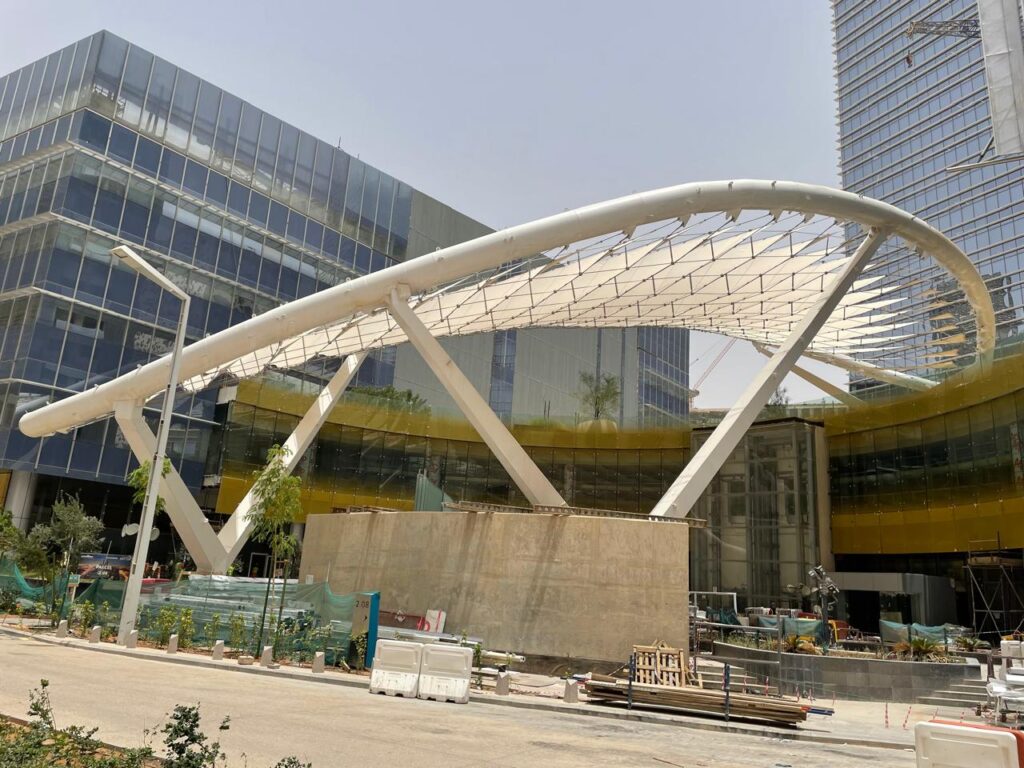
Canopies and outdoor structures are also playing an essential role in urban planning throughout Saudi Arabia. Given the Kingdom’s climate conditions, shaded public spaces, parking canopies, walkways, and recreational facilities contribute significantly to improving urban usability and comfort.
As urban development expands, the demand for high-quality canopy systems and public infrastructure solutions continues to increase.
Another important trend shaping the future of construction in Saudi Arabia is sustainability.
Environmental responsibility is becoming a key consideration in modern infrastructure development. Developers and authorities are increasingly prioritizing projects that support energy efficiency, waste reduction, sustainable materials, and environmentally responsible construction practices.
Construction companies are therefore expected to adopt sustainable engineering approaches and improve resource management throughout the project lifecycle.
Digital transformation is also changing the future of the construction industry. Advanced technologies such as Building Information Modeling (BIM), artificial intelligence, digital project management platforms, and smart infrastructure systems are improving the efficiency and accuracy of construction operations.
These technologies help reduce errors, optimize project coordination, improve scheduling, and enhance communication between stakeholders.
The integration of smart systems into modern developments is also creating demand for more technically advanced engineering and infrastructure solutions.
Saudi Arabia’s growing tourism and entertainment sectors are further driving construction growth. Projects involving resorts, entertainment cities, cultural destinations, sports venues, and hospitality developments require specialized engineering expertise and high-quality project execution.
These sectors are expected to remain major contributors to construction activity over the coming years.
Educational and healthcare infrastructure development is another important area of growth. Schools, universities, medical centers, and public service facilities are expanding across the Kingdom to support population growth and national development goals.
Construction companies capable of delivering institutional projects according to strict standards will continue to play an important role in supporting these initiatives.
Governmental support and investment remain key drivers behind the growth of Saudi Arabia’s construction sector. Public-private partnerships, infrastructure funding programs, and regulatory improvements are helping create a more attractive environment for investment and project development.
The Kingdom’s commitment to economic diversification is encouraging both local and international companies to participate in large-scale infrastructure and urban development projects.
However, the future of the construction industry also comes with challenges. Construction companies must adapt to increasing expectations regarding quality, safety, sustainability, and operational performance.
Competition within the industry is becoming more intense, requiring companies to strengthen their technical capabilities, improve project management systems, and invest in skilled engineering and operational teams.
Workforce development is another important factor shaping the future of the industry. As projects become more technically advanced, there is growing demand for experienced engineers, project managers, technical specialists, and skilled labor.
Companies that invest in training, innovation, and professional development will be better positioned to succeed in the evolving construction environment.
Safety standards are also becoming increasingly important across all sectors of construction. Modern projects require strict compliance with safety regulations and operational procedures to protect workers, project environments, and public infrastructure.
Construction companies must therefore maintain strong safety cultures and implement advanced safety management systems.
Another major factor influencing the future of construction in Saudi Arabia is localization and industrial development. The Kingdom is encouraging local manufacturing, fabrication, and engineering capabilities to support national economic growth.
This creates opportunities for local contractors and suppliers to participate more actively in major projects while strengthening domestic industries.
As Vision 2030 projects continue to expand, the construction industry will remain one of the most important sectors contributing to the Kingdom’s transformation.
Companies capable of delivering integrated engineering solutions, professional execution, quality standards, and operational excellence will continue to play a critical role in shaping Saudi Arabia’s future infrastructure landscape.
In conclusion, the future of infrastructure and construction development in Saudi Arabia is filled with opportunity, innovation, and transformation.
The Kingdom’s ambitious projects and long-term development goals are creating unprecedented demand for modern construction solutions, advanced engineering expertise, and high-quality project execution.
As the industry evolves, companies that focus on quality, sustainability, technology, safety, and professional project management will remain essential partners in building the future of Saudi Arabia.